Blog

Consonant vs Dissonant intervals

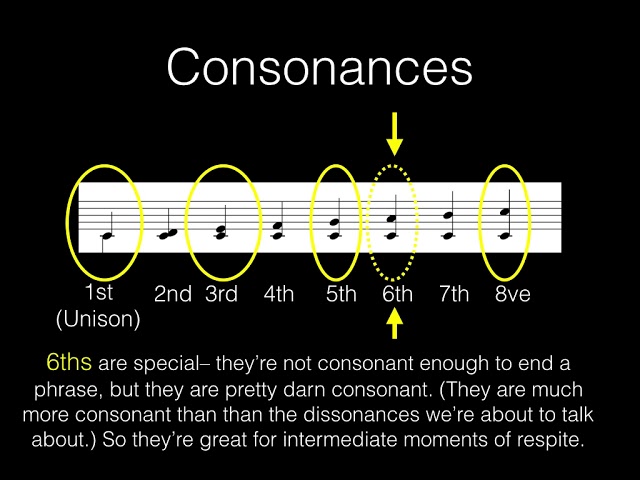
In music, certain intervals sound melodic and soothing to the ears. whereas some intervals sound harsh and unresolved. The intervals that are soothing are labelled as consonants. This includes unison, major and minor thirds, perfect 4th, perfect 5th, major and minor 6th and octave. On the other hand, intervals that have a harsh sound to it are labelled as dissonants, such as major and minor 2nds, tritone and major and minor 7ths. The tonal quality of a chord is shaped by how many consonants or dissonants the chord holds. A chord comprising of only consonants can sound very soothing to the ears. Similarly a chord with only dissonants can be very dramatic and extreme. And depending on the sound we desire, we can mix the number of consonants and dissonants in a chord.

Triads

When it comes to chords, I like to categorise chords in 3 broad categories. We have the different types of dyads which are 2 note chords, mostly used as power chords in rock/heavy music. Then we have the triads, the most commonly played chords on guitar that got 3 notes in them. Lastly we have the realm of extended chords where the possibilities are limitless. In this post we will talk about the triads.

Triads can be of 6 types. All the 6 types will be explained in the key of C. Try to remember the formula that will allow you to derive these chords from the major scale in any key.

Major triad:

Major triads are the easiest ones to understand, taking the root, the third and the fifth to construct the chord. The C major chord is as following:

Notes:     C    E   G

Formula: 1   3    5

Minor triad:

If you remember from the previous discussion, minor is the same as major with three altered notes. Remember the number 367 as all these intervals are flattened in minor. Which means C minor triad is:

Notes: C   Eb    G

Formula: 1    b3    5

Diminished triad:

The spooky sounding diminished with a tritone in it. Again, as discussed earlier, the closer the intervals, the shorter the distance between notes, the darker the sound of the chord. In a diminished triad, we not only flatten the 3rd, but also the 5th. C dim chord goes like this:

Notes:   C    Eb     Gb

Formula: 1   b3     b5

Augmented triad: 

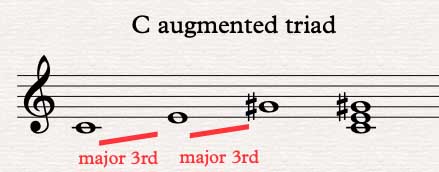
Augmented chords got a strange sound, usually used in sci-fi background music or any genre that requires to create an interesting and strange sound but less of the evilness of diminished chords. Augmented triad is a major triad with an augmented 5th. Augment is the same as sharpening a note or moving one fret higher.

Notes: C     E      G#

Formula: 1   3   Aug5

Suspended 2 and 4:

In suspended chords, we suspend the 3rd interval of a chord and replace it with either the 2nd or the 4th. In Suspended 2 the notes are:

Notes:   C     D    G

Formula: 1   2      5

And for suspended 4:

Notes:   C      F       G

Formula: 1    4      5

End of year note

Dear students, thank you all for being a part of MGW during this extremely difficult year. In the midst of a pandemic, lockdowns, financial uncertainties and travel restrictions, you have managed to sustain your passion for music and continue to practice to become a better musician.  It has been a privilege watching you all grow musically and being able to be a part of it. It’s a lifelong journey and there is simply no shortcut. The role of a mentor is to provide a structure so that students can learn progressively and provide adequate assistance to build the confidence. That is what I always aspire to do.

I am taking a leave for 2 weeks starting from this Monday (21.12.20) and will resume the lessons from 4.01.21. During these two weeks, I will spend some time with my family, review the current lessons and prepare some new and useful lessons for the next year.

As you may know that I was working towards my PhD in economics and I am almost at the end of this very gruelling journey. Meaning very soon I will be at the crossroad of making a difficult decision of whether to pursuit a fulltime career in academia or music. I am very much up for following my passion and continue with the guitar lessons and be more regular in the live music scene. However, that means I will have to be a bit more commercial with the weekly lesson schedule and be more professional with lesson cancellations in order to ensure a steady weekly cashflow. I will post an update on this when the time comes.

Wishing you all a Merry Christmas and a very happy and prosperous 2021.  And as the legendary Eddie van Halen says, ‘keep playing, it’s the only thing there is, music’.


Major 7th, minor 7th and dominant 7th chords

In general there are 5 different types of 7th chords that are often played by guitar players in different genres. Other than the three we are discussing in this post,  the two other 7th chord shapes are called half diminished chord (also known as minor seventh flat five chord) and the minor major 7th chord.

Major 7th: It is a major triad with an added major 7th. In the key of C it is C  E  G  and B

Minor 7th: It is a minor triad with an added minor 7th. In the key of C it is C Eb G and Bb

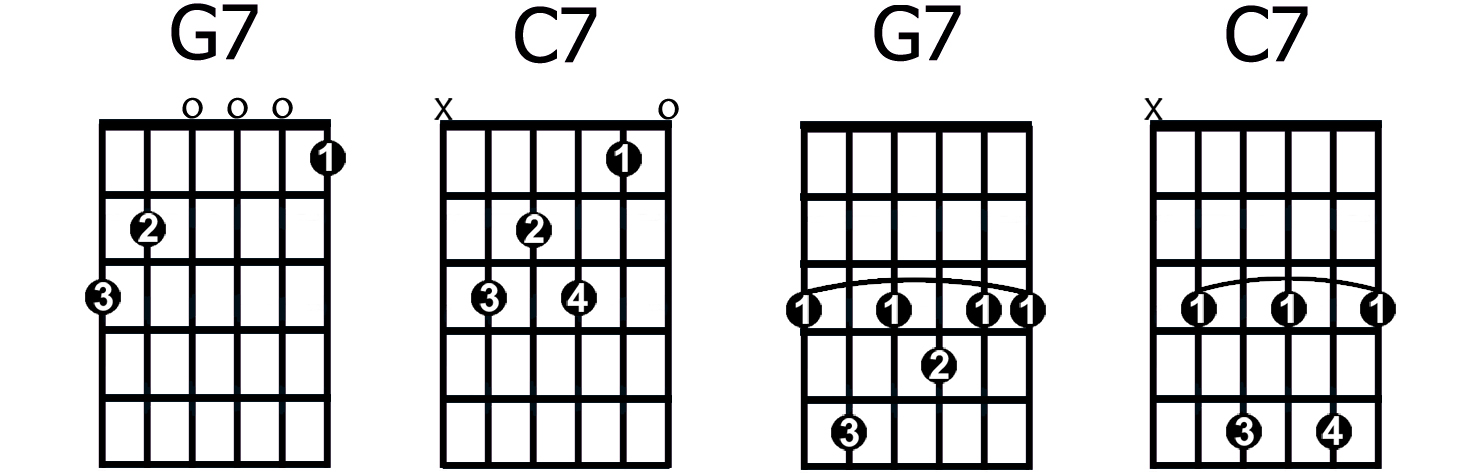
Dominant 7th (also known as 7th): It is a major triad with an added minor 7th. In the key of C it is C E G and Bb

The unique characteristic of the dominant 7th chord is that it contains a tritone (E and Bb) that gives the chord a very strong tonality. The other interesting thing about this chord is the blend of major and minor intervals. This allows the musicians to play both major and minor intervals on top of the dominant 7th chords, which is very common and popular in blues.

Secondary Dominant

Secondary Dominant refers to the use of dominant chords of any diatonic chord. Diatonic chord in simple and practical terms mean ‘in the key of’. So the diatonic chords in the key of C are:

C  Dm  Em  F  G  Am  Bdim

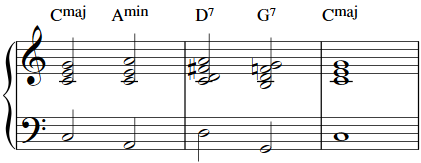
If we use the dominant chord for any of these chords, which happens to be a non-diatonic chord in the key of C, we can label that as a secondary dominant. To know what is meant by the dominant chord, please read this (scale degree). For example, the dominant chord in the key of G is D. We can see that G is a diatonic chord in the key of C. However, D is not and in the key of C, we only have a Dm. The use of D in a chord progression written in the key of C will be labelled as a secondary dominant. The best way to use the secondary dominant is to play that chord, then follow it up with the tonic chord related to that dominant and then move to other diatonic chords. The following chord progression is an example where the progression is written in the key of C and D is the secondary dominant.

C  Am   D   G

Modal Interchange

Modal interchange in simple terms is borrowing chords from a parallel mode. The important thing to remember here is the borrowed chord is from a PARALLEL mode and not just any random key. And also how those borrowed chords are used and how many have been borrowed because the mood of the song can easily sway from the original mode to the one from the chords are borrowed from if too many chords have been used. Below we have an example with the key of C where a song is originally written in the key of C but modal interchange is used. We could use any mode for this but to keep it simple, we are only using the C natural minor (aeolian mode) for this. The C natural minor will have the following chords.

Cm    Ddim    Eb    Fm    Gm    Ab     Bb

So a progression such as C   G   Cm   F can be an example for a modal interchange where the progression is written in C but the Cm chord is borrowed from the parallel key. The borrowed chord gives the chord progression the flavour of the mode from which it has been borrowed. For example the natural minor has a sad sound to it and the borrowed Cm chord in this given example adds a certain degree of melancholy to the progression.

Student performance of the week!

I have decided to add something to inspire students to practice and prepare for performances. In order to add an incentive, I will be uploading the best performance of the week on social media platforms, under each student’s lesson for that week and also upload a clip of our performance on the website so people can watch. There are currently more than 50 enrolled students and almost 2000 facebook followers so it certainly will be viewed by a good number of people and will help to build confidence for the student. So make sure to prepare and put up your best performance. Let me know when you are ready so we can record a quick video of you/us playing that piece/song!

All related major and minor pairs

It is important for a musician to memorise all the related major-minor pairs as this is very useful for songwriting and improvisation. Feel free to create a mnemonic to make it easier to remember. I memorised these just by playing them over and over, worked well for me 🙂

C Major  – A minor

D Major – B minor

E Major – C# minor

F Major – D minor

G Major – E minor

A Major – F# minor

B Major – G# minor

Related major and minor for all the diatonic modes

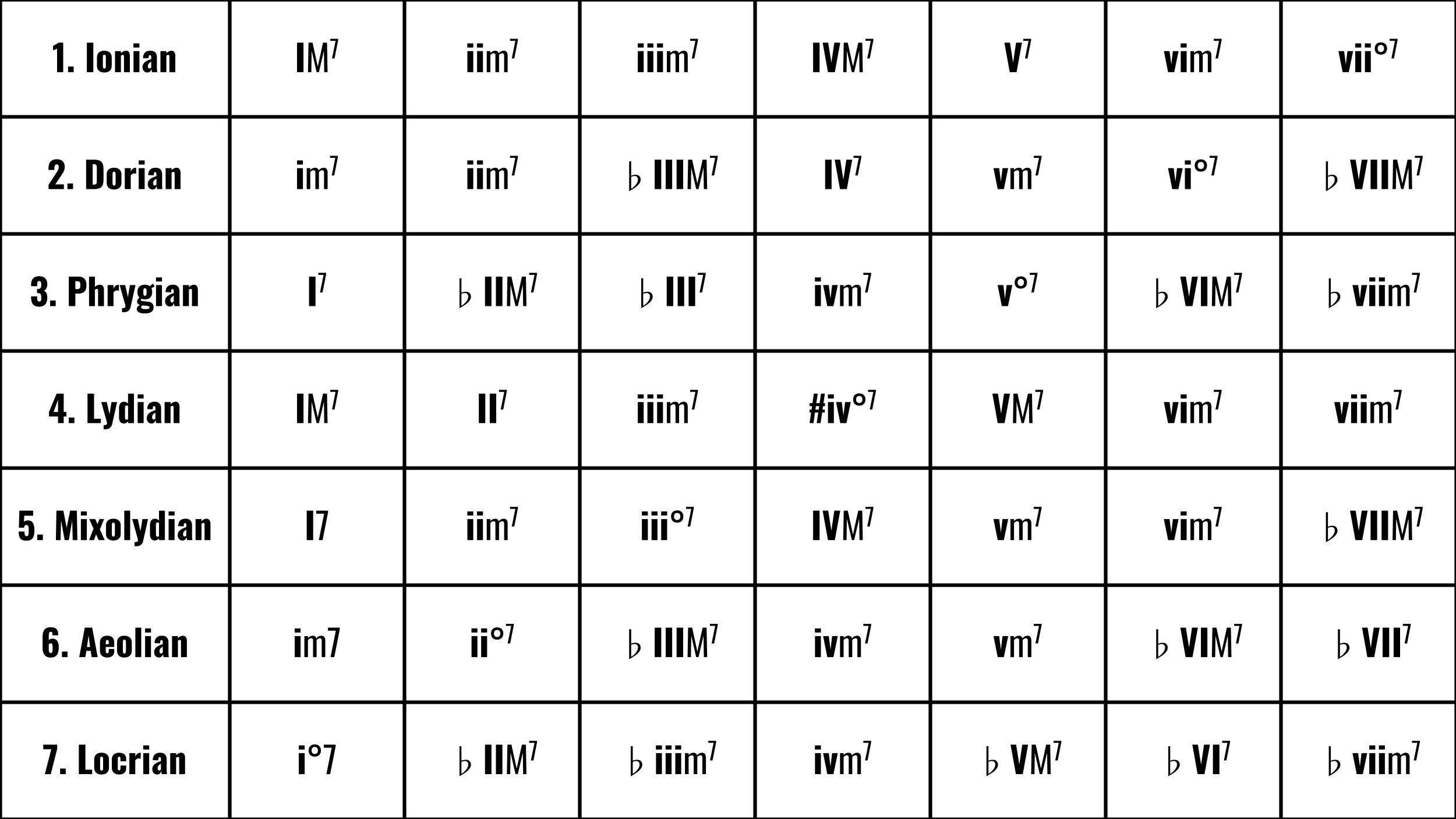
The seven diatonic modes that we studied previously (click here) can be categorised between major and minor flavoured modes. Just how every major key has a related minor and vice versa, all the modes also have a related key which can be ranked from brightest to darkest. In this categorisation, we will ignore Locrian as this resembles more with the Diminished scale and almost never used independently in contemporary music. The remaining 6 are divided between major and minor flavoured modes and the following table ranks them from brightest to darkest along with their related keys.

 Major

 Related minor

 Lydian

 Dorian

 Ionian

 Aeolian

 Mixolydian

 Phrygian

Lydian is the brightest sounding major mode while Mixolydian being the darkest. Similarly Dorian is the brightest sounding of all minor modes with Phrygian being the darkest. To know more about relative major and minor, click here.

If we take the key of C as an example, then we know the related minor of C is A minor. Similarly, the related minor for C Lydian is A Dorian and for C Mixolydian it is A Phrygian. So if you write a song in C Lydian, for a smooth modulation, you should move to A Dorian and vice versa. Understanding the tonal characteristic of all these modes will allow you to use them efficiently in song writing.

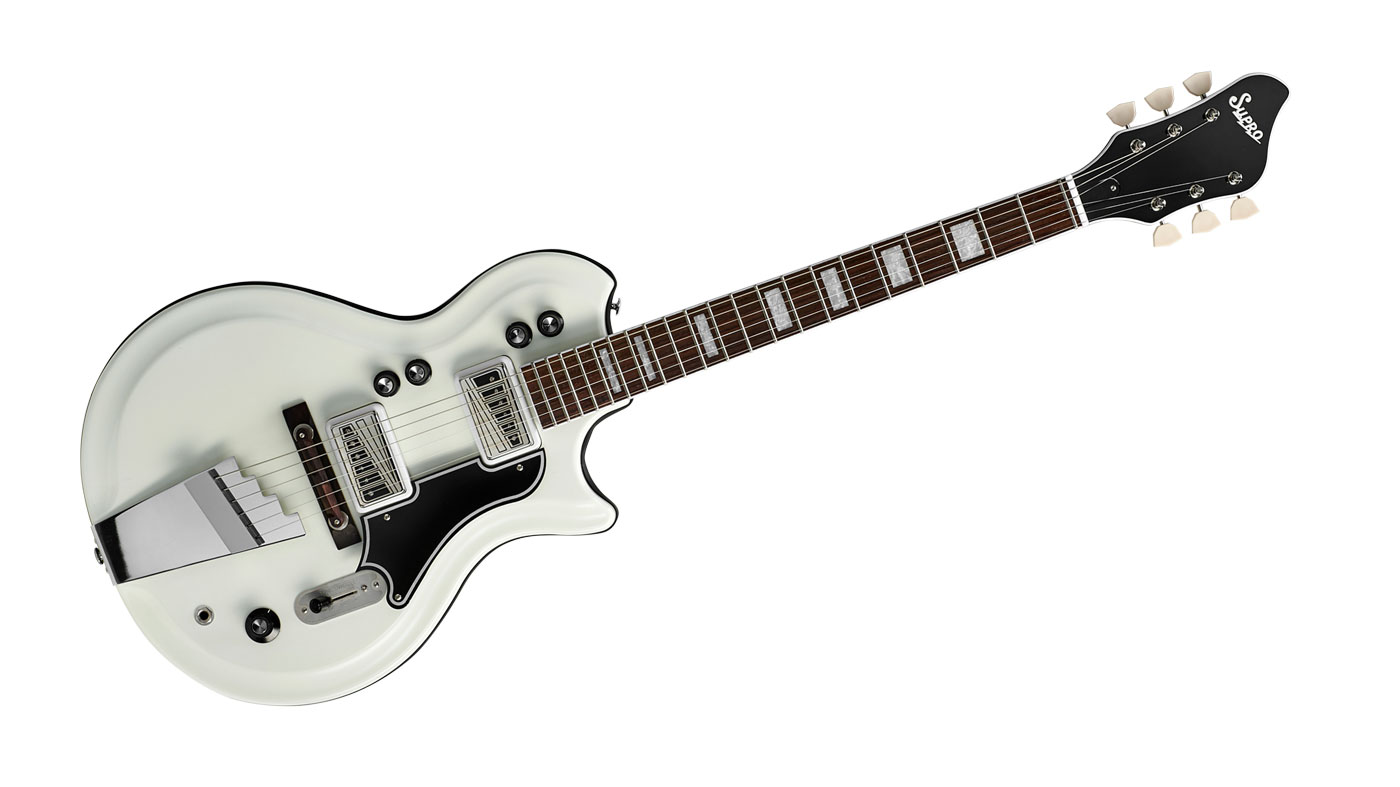
Guitar design and its effect on the tone

The true tone of the guitar is very important to have a good final output in recording and also during live performance. There is a plethora of factors that contribute to the tone of the guitar, starting from its construction and design.

Body style:

Single cutaway

Single cutaway makes it easier to play the higher notes, high up the neck. Also provides a distinct classic look to the guitar. The downside is that some of the low notes high up the neck can be inconvenient to play.


Double cutaway

Same benefits of single cut but makes it a little easier to play the low notes high up the neck. Also a lot of people like the symmetric look for aesthetic purpose.